Research
Magnetic fields,
layer by layer.
I study the Sun’s chromosphere by connecting what telescopes measure to the physical atmosphere that produced the light.
The scientific thread
The chromosphere is the dynamic interface between the visible solar surface and the million-degree corona. Its magnetic field controls the transfer of energy and mass, yet remains difficult to measure. My research combines simultaneous observations of several spectral lines, non-LTE inference, realistic 3D simulations, and machine learning to make that field observable.
01 · THESIS RESEARCHProbing chromospheric magnetic fields through observations.
My doctoral work established a multi-line observational route to this question. I compared Hα polarization with Ca II diagnostics, using the weak-field approximation and non-LTE inversions to reconstruct magnetic-field stratification from the photosphere into the chromosphere.
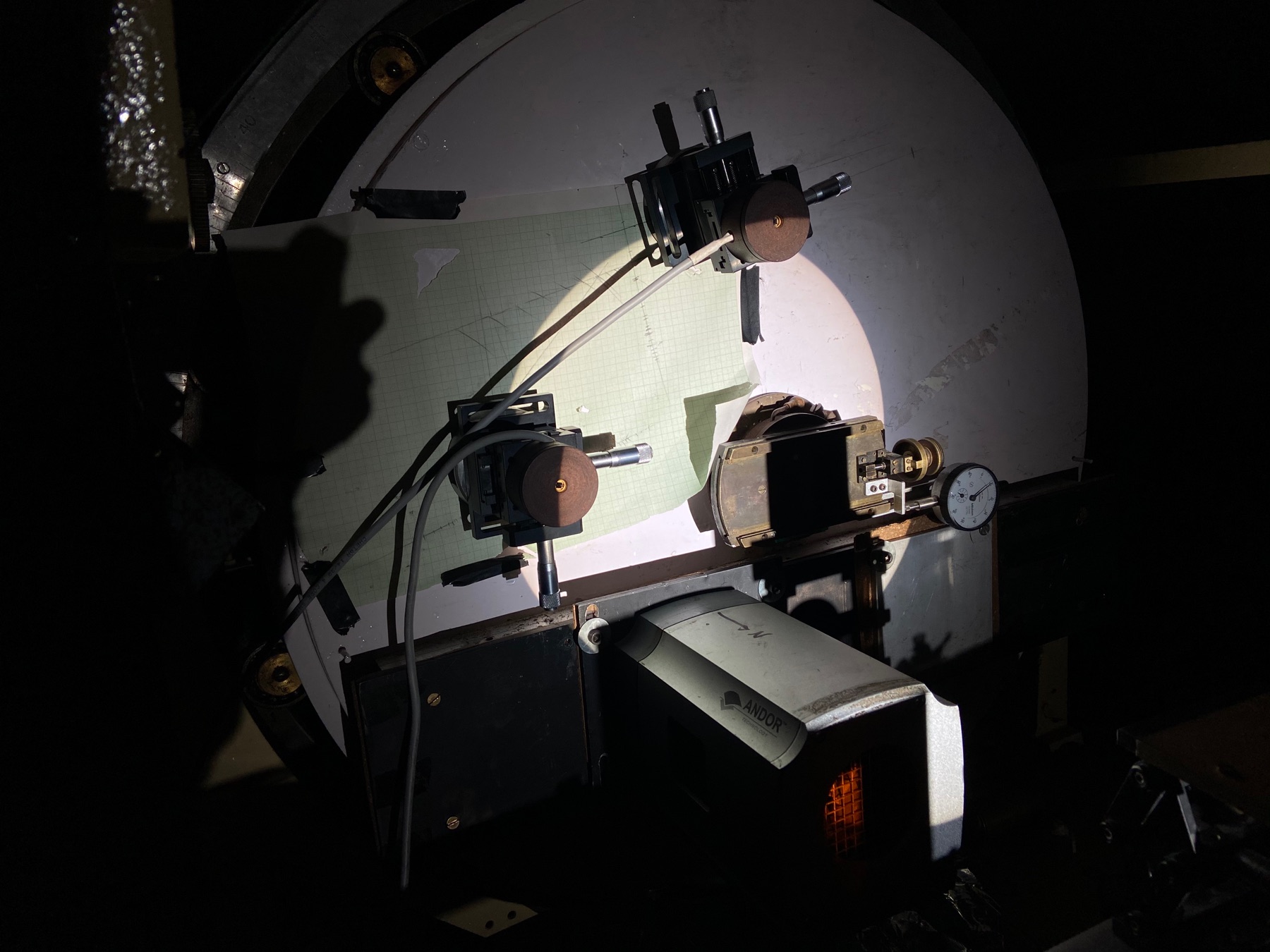
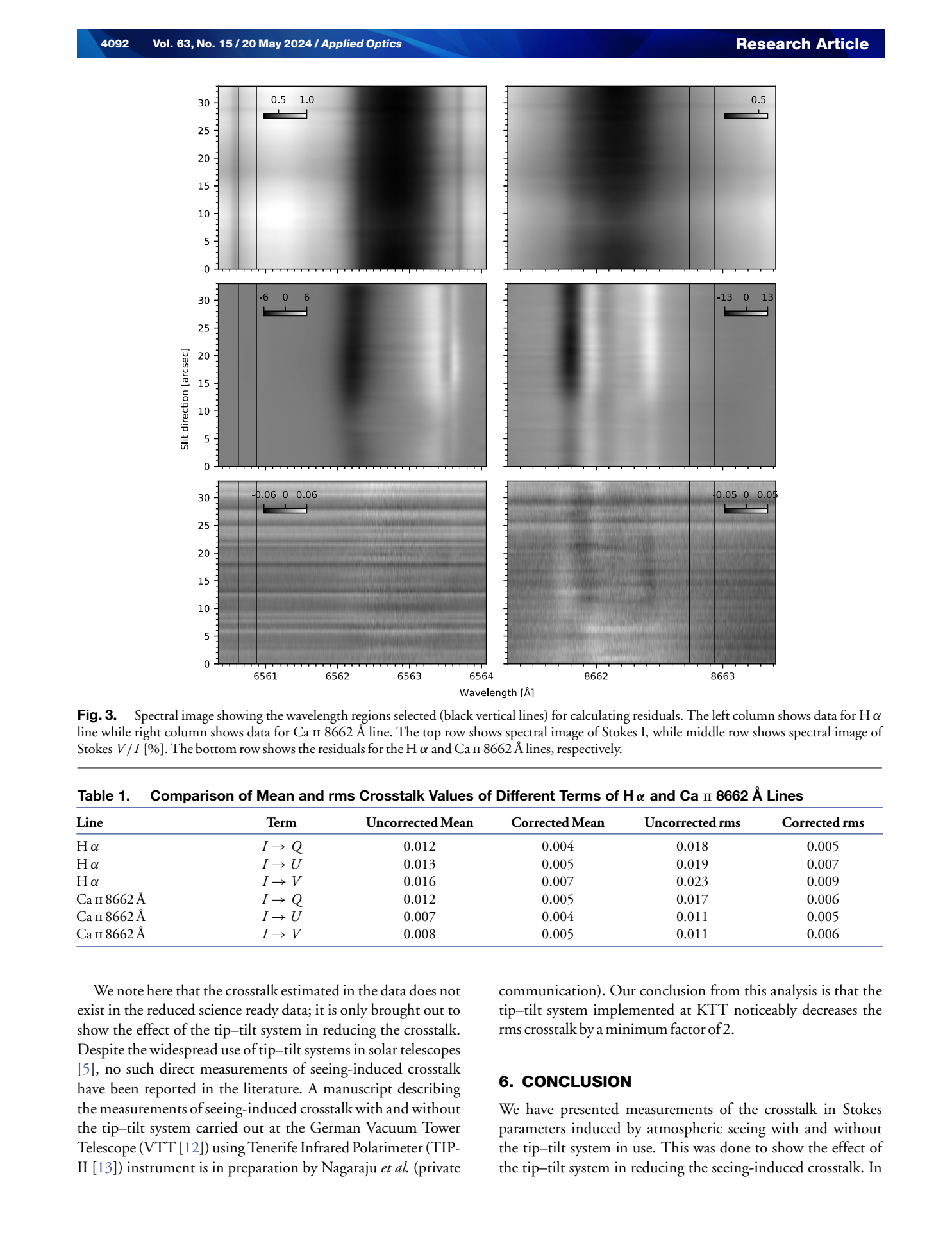
To extend these measurements, we upgraded the Kodaikanal Tower Tunnel Telescope for simultaneous three-line observations and developed tip-tilt and autoguider systems. The stabilization reduced seeing-induced polarimetric cross-talk by at least a factor of two. Observations of active region NOAA 13315 then showed that the Hα core consistently samples higher chromospheric layers than the Ca II infrared triplet, while localized heating can make a wider portion of Hα sensitive to chromospheric fields.
Hα adds a complementary, higher-altitude view of the chromospheric magnetic field.
View thesis record ↗ MOST CITED PAPERFollowing acoustic shocks through the quiet chromosphere.
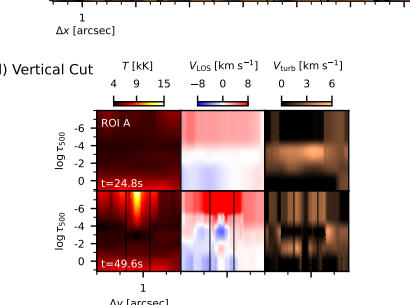
In this Astronomy & Astrophysics study, we used simultaneous Fe I 6173 Å, Ca II 8542 Å, and Ca II K observations from the Swedish 1-m Solar Telescope. Multi-line non-LTE inversions with STiC allowed us to follow the changing temperature, velocity, and microturbulence of short-lived Ca II K bright grains.
At peak brightness, the lower chromosphere heated by about 1.1 kK on average, with local enhancements reaching approximately 4.5 kK. The heating coincided with upward flows as fast as 6 km/s, while higher chromospheric layers showed downflows above 8 km/s. Together, these measurements provide observational evidence that the grains are upward-propagating acoustic shocks moving through a background downflowing atmosphere.
Direct, time-dependent evidence for the atmospheric structure of quiet-Sun acoustic shocks.
Read the open-access paper ↗ 02 · BEYOND THE THESISTesting Hα Stokes V as a chromospheric magnetic-field diagnostic in a realistic 3D Sun.
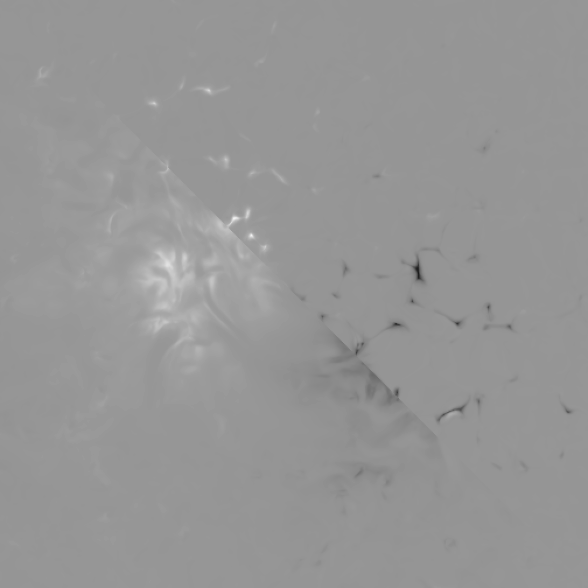
In a 2025 Astrophysical Journal Letters study, we synthesized Hα, Ca II 8542 Å, and Fe I 6173 Å profiles through a 3D radiative-MHD atmosphere. The result confirmed the observational picture: the Hα core sampled the line-of-sight magnetic field around 500 km higher, on average, than the Ca II core.
The simulated polarization remained informative after realistic noise was added, supporting simultaneous Hα and Ca II observations as a practical way to recover magnetic-field stratification at complementary heights.
The Hα core primarily sampled log τ₅₀₀ = -5.7, compared with -5.1 for Ca II 8542 Å.
Read the paper ↗ 03 · DATA-DRIVEN POLARIZATIONFinding structure in complex spectra.
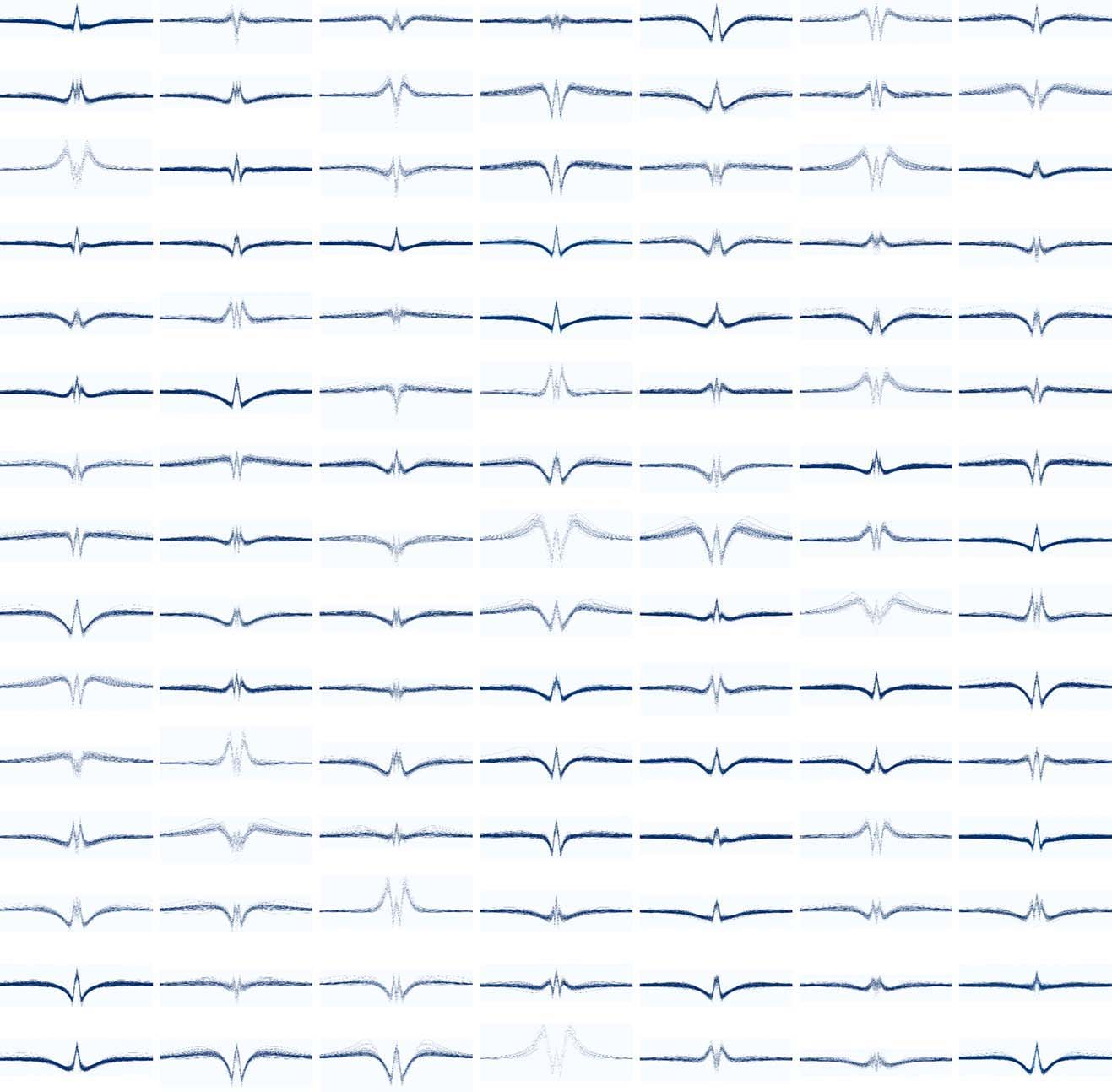
My work on Ca I 4227 Å uses realistic MHD atmospheres and k-means clustering to organize large families of synthetic polarization profiles. The study explains how temperature structure and non-LTE source-function behavior shape the line’s characteristic signals.
This provides a physical and computational foundation for interpreting the spatially and temporally resolved polarization measurements now becoming possible with next-generation facilities such as DKIST.
Read the paper ↗ INSTRUMENTATION INTERESTSFrom image stabilization to faint-signal polarimetry.
My first-author instrumentation work includes developing the image autoguider and evaluating seeing-induced crosstalk for the Kodaikanal Tower Tunnel Telescope. These projects connect telescope control, image stabilization, calibration, and error analysis directly to the quality of solar spectropolarimetric measurements.
I also contributed as a co-author to the SPOLEO study led by Raveena Khan. That collaborative work explored a reflection-based EUV spectropolarimeter concept, including throughput, telescope aperture, integration time, and a Brewster-angle K-mirror polarimeter for exceptionally faint Hanle-effect signals.